From the BIM model into day-to-day operations. New APX modules bring digital workflows to construction, starting with water, wastewater and building services.
APX Systems offers a digital platform covering processes from order to delivery. Its new modules extend this approach across construction. The platform connects to the NOBB database (Norwegian Building Materials Database), allowing up-to-date product information to follow the project throughout the supply chain. Contractors, developers, project managers and suppliers all work with the same standardised data. Autodesk Construction Cloud also helps them collaborate.
BIM integration enriched with product data and environmental product declarations from NOBB and EFO.
One of the latest modules links BIM closely with the Autodesk platform. APX can extract materials and components directly from BIM models created in applications such as Autodesk Revit and add product information from NOBB automatically. This provides standardised item numbers and technical specifications, as well as NRF numbers, NOBB numbers and GTINs. Users can see all the components and which suppliers carry the same product. The BIM model links design and logistics and makes it easier to identify alternatives.
Autodesk Construction Cloud brings project management and collaboration together for modern construction projects.
Digital procurement with Peppol and mini-competitions
Once a materials list has been generated in BIM, the APX platform can convert it directly into electronic purchase orders. Orders go to participating suppliers via the Peppol network in a standard format. The system also handles order confirmations and level 3 electronic packing lists automatically, keeping shipment information up to date. Suppliers that do not yet support EDI or Peppol receive a PDF.
APX is also introducing a competitive quotation feature in the purchasing module. A project team can request quotes from several suppliers for selected goods at once. Suppliers follow a link to enter prices and delivery times, and buyers can compare the offers in the same system. An item specified in BIM is used as the original reference. A lookup in NOBB, for example, identifies other suppliers offering that item. Each supplier opens the link, fills in details such as price and confirms the response, giving the buyer the information needed to select a supplier.
Progress tracking and as-built data in BIM
The APX platform’s built-in BIM viewer shows project progress in the model itself. Teams can see which components have been ordered, delivered and installed, making it easier to spot discrepancies early.
After installation, the team records details such as serial numbers and delivery dates. These as-built records are added to the completed BIM model, which then shows what was actually installed. This supports operations, maintenance and traceability throughout the building’s life. Batch and serial numbers also make the sustainability data more precise, including the environmental product declaration (EPD) and digital product passport (DPP).
Benefits across the construction industry
- Product data in the BIM model Direct connections to databases such as NOBB and EFO keep standardised product information up to date in the model.
- Automated purchasing and quotation requests Bills of materials can become electronic orders in seconds. Orders are sent via Peppol, and the mini-tender function can request several quotations at once.
- Live progress tracking An integrated BIM viewer shows project managers which items have been ordered, delivered and installed.
- More complete as-built records The BIM model is updated with details of the components actually installed, creating a digital twin for building operations and maintenance.
- Shared standards for the construction industry Standards such as NOBB, NRF, Peppol and GS1 help project partners exchange information throughout construction.
These modules link design, logistics and operations. They reduce manual work and costs and help everyone involved use the project data more effectively.
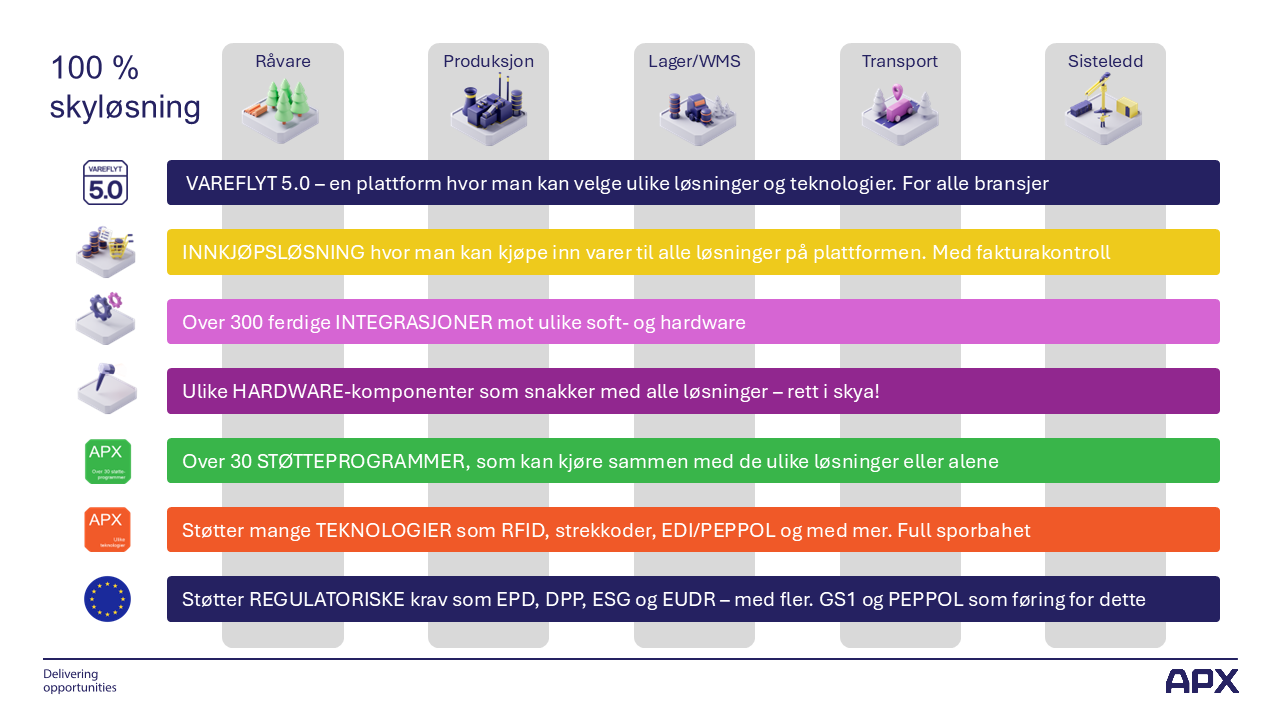
Supports the standards associated with BEAst 4.0 and can be part of the platform APX VareFlyt 5.0

