From signs in the snow - to digital control of production and logistics with APX
When the City of Oslo needed to keep track of thousands of components for a major water supply project, ELIQUO PMI needed new systems. It now uses APX for warehouse management, production tracking and quality documentation. The company estimates that welding documentation alone takes about one full-time employee's annual workload less than before.
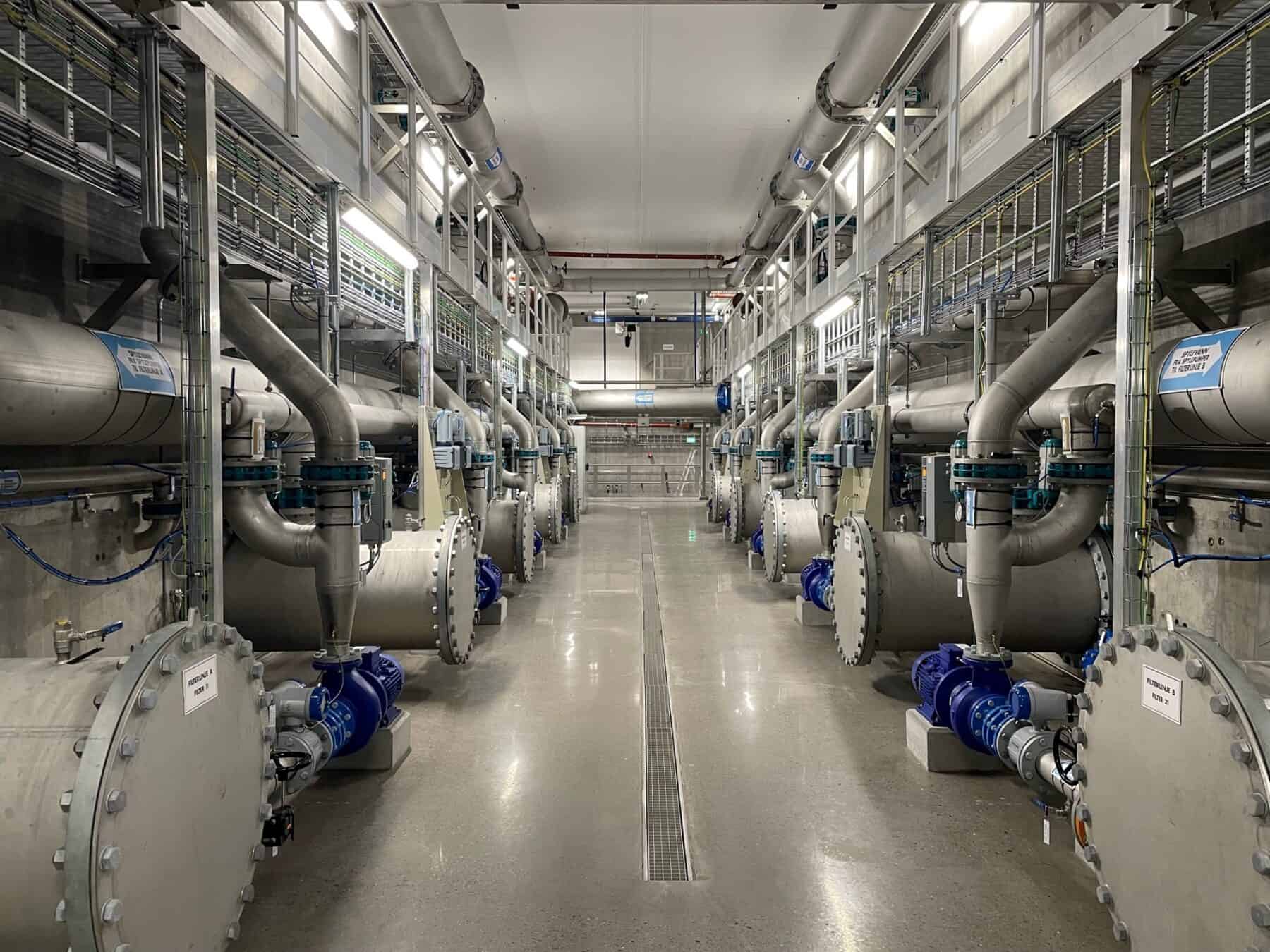
ELIQUO PMI supplies process and environmental engineering solutions, specialising in water and wastewater treatment. For over 40 years it has delivered complete systems, process equipment and mechanical installations for water and wastewater plants, district heating and the process industries. Today it employs around 140 people, including approximately 90 skilled tradespeople and installers. Its Sandefjord workshop manufactures components for projects and facilities throughout Norway.
We spoke to three employees who use APX every day: production manager Trine Sommerseth Lie, Reidulf Holm, who oversees day-to-day work in the workshop, and project engineer Philip Gogstad. What began as a need for better stock control has grown into the use of APX across several parts of the business.
Digital inventory control became a necessity
ELIQUO PMI’s deliveries to the Oslo water supply project highlighted the need for better control of materials and logistics. Large quantities of components had to be manufactured in Sandefjord, stored and transported to the site while deliveries from several subcontractors had to be coordinated. Some components also had to be available before others could be installed.
Staff used to track much of this by hand. Pallets were marked with project numbers, records were kept in Excel and employees had to ask one another what had arrived and where it was. With so much stock stored outdoors, winter made the task particularly difficult.
“We used to do much of the follow-up manually. We actually had signs out in the snow to mark where materials were stored. As volumes grew, we needed a better way to see both where the materials were and what stage they had reached in the project,” says Sommerseth Lie.
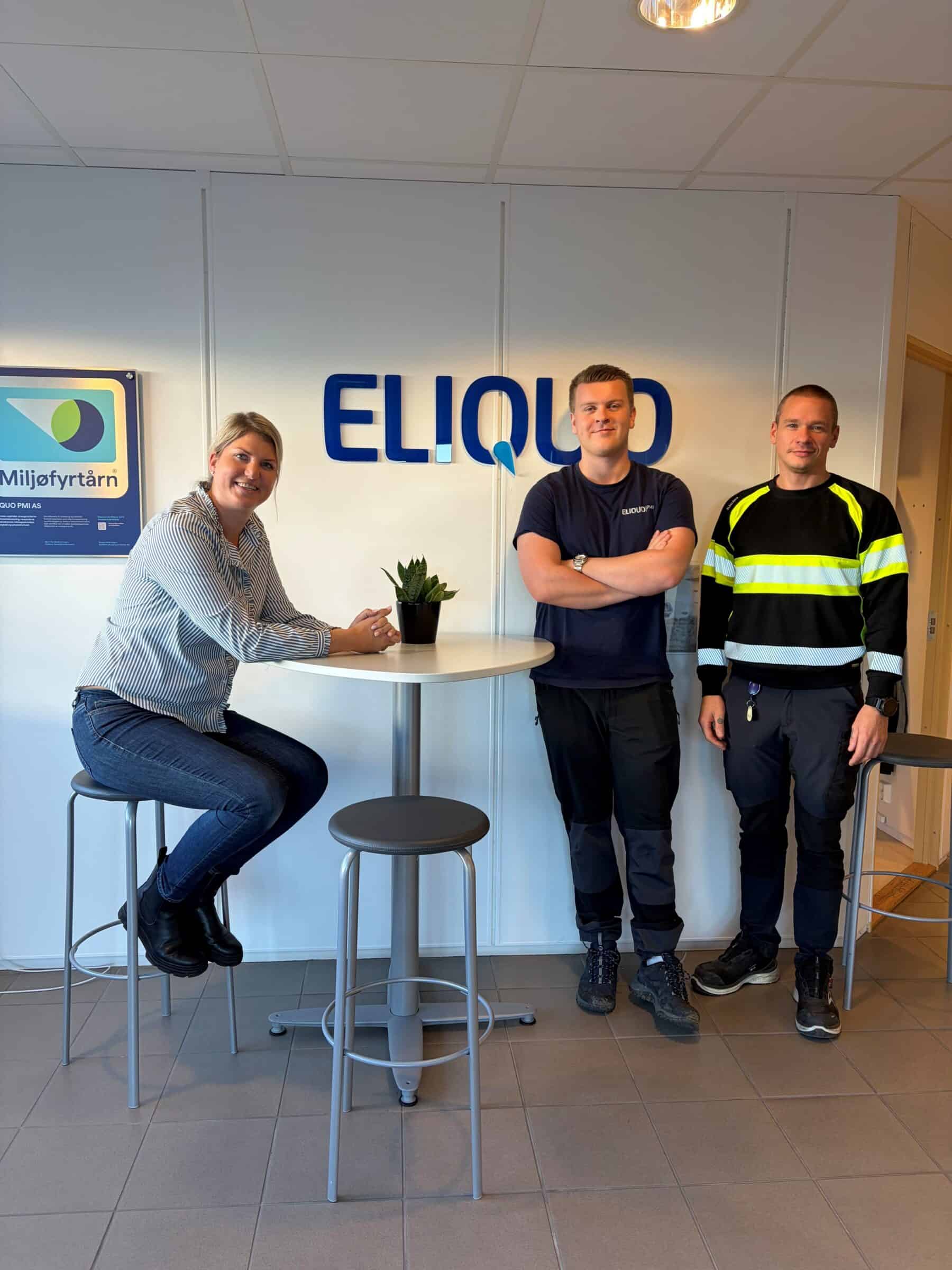
Trine Sommerseth Lie, Philip Gogstad and Reidulf Holm
From stock control to production tracking
The water supply project made it clear that other processes could be digitised, including production tracking, quality control and documentation. ELIQUO PMI identified the need for adaptations early on and began developing the production module further with APX.
“Most of our production is project-based, and many components are one-offs. Our recording and traceability requirements are therefore different from those of conventional series production. We started with one project and had the solution tailored to it. Since then, we’ve used APX on other projects with different needs, and development is still ongoing,” says project engineer Gogstad.
Today, APX is used in purchasing, warehousing, prefabrication, production tracking and installation. The functions used vary from one project to another, a flexibility that ELIQUO PMI considers important.
Welding documentation alone saves an estimated year of full-time work
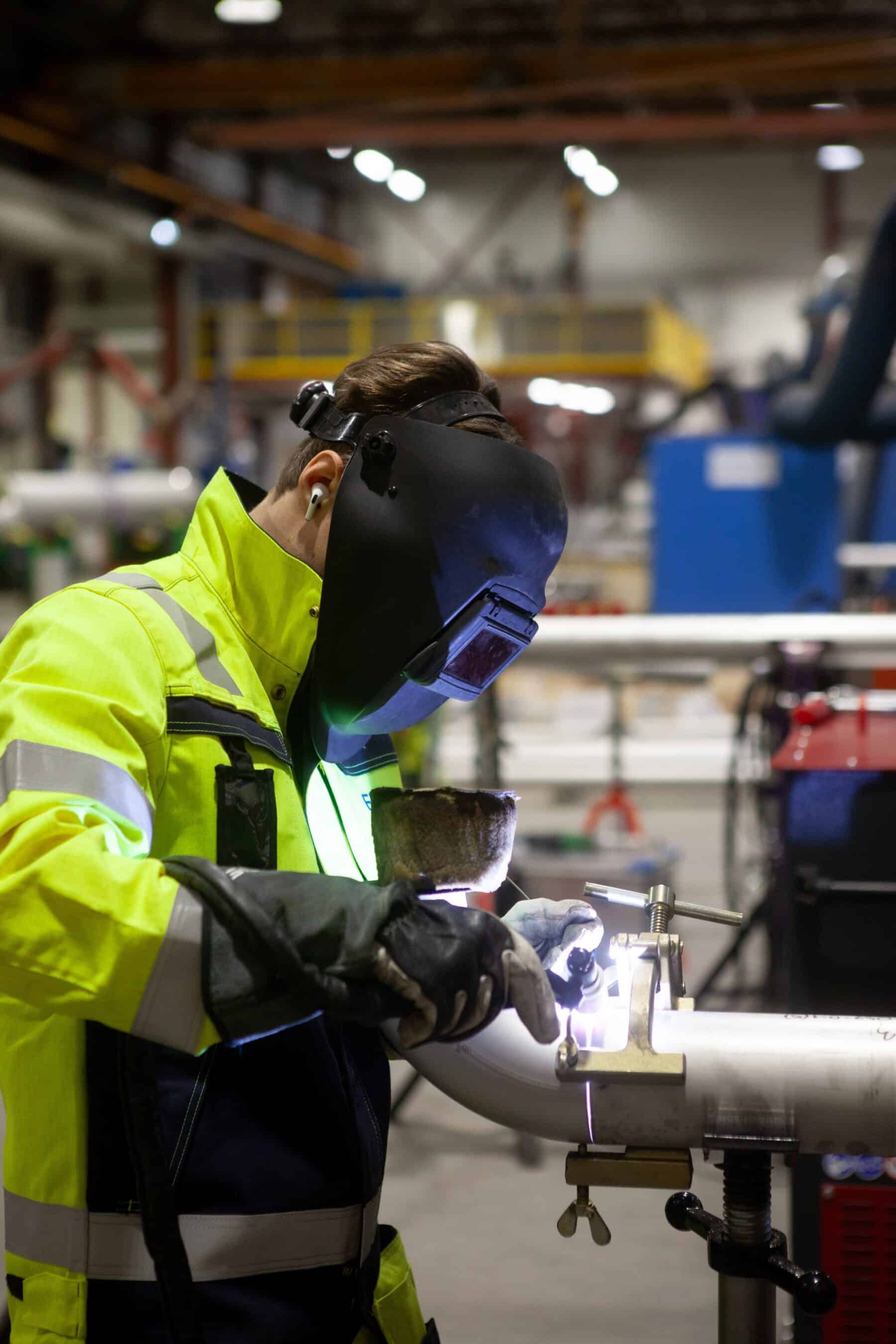
Documenting welds is one of the areas with the largest time savings. The workshop faces extensive traceability and quality control requirements. For each weld it must record, among other things, who carried out the work, which method was used and which materials were involved. Checks and approvals follow, with third-party inspection in some cases.
Much of this information used to be written on drawings and checked afterwards. With APX, employees can enter it digitally, scan materials and link the documentation directly to each component.
“The whole welding documentation process has become far more efficient. The workshop staff can record the information themselves, and we can retrieve it afterwards. We used to make notes on the drawings. Now we can scan the materials and see exactly where they were used,” says Holm.
The workshop logged around 70,000 production hours in 2025. With the current solution, the team estimates it saves the equivalent of one full-time position on welding documentation alone.
“Keeping track of the workshop and the weld log takes a fair amount of work. We estimate that we save the equivalent of a full-time position on this, and that’s a conservative estimate,” says Holm.
Fewer errors and a clearer view across departments
Digital recording has also improved control over the documentation. Required fields in APX can be made mandatory, so employees must complete them before they can finish an entry.
“Scanning also reduces the risk of recording the wrong materials against the wrong components. People used to forget to write things down. Now they have to fill in the required fields. When we run reports, it is also easier to spot anything that stands out,” says Holm.
For production manager Trine Sommerseth Lie, much of the value lies in seeing the status of work while it is in progress.
“Being able to run reports gives us a great deal. We can retrieve welding documentation, track progress in several ways and see what we’re still missing from the warehouse,” she says.
Information is also more accessible across departments. Project engineer Philip Gogstad has worked across several parts of the business, from purchasing and warehouse logistics to production and installation.
“Now I go straight into APX and see what was ordered, when it was ordered and the status of what’s in production. That makes it much easier for us to follow up. Everyone has access to the information, so we don’t have to depend on one particular person being there or knowing the answer,” says Gogstad.

Having more information in one place has also reduced the need for spreadsheets and paper records.
Close collaboration led to a tailored solution
ELIQUO PMI worked closely with APX as the solution took shape. During the start-up phase, the teams met every two weeks to discuss what was working, where problems had arisen and what to develop next.
The production module in particular has been adapted to their needs, including individual component marking, material traceability, signatures, quality control and documentation.
“Bård has taken the time to understand our industry. When we ask for something, he understands what we need and how to make it work. We’ve worked directly with APX to develop the solution we need. They’re quick to act if something goes wrong, too. We’ve had support and a fix within an hour. It’s unusual to have such close contact with a supplier,” says Sommerseth Lie.
New opportunities for development
APX is now widely used in the workshop, warehouse and production operations. ELIQUO PMI expects to use the solution on most future projects where prefabrication is part of the delivery.
The partners are exploring further development. One possibility is to link production status directly to a 3D model. They are also discussing wider use of QR codes to simplify data capture and tracking.
“If you struggle to keep track of things and need good quality documentation, this is very relevant. Traceability and documentation requirements are growing, and APX has given us a solution we can adapt to the way we actually work,” says Holm.
“We’ve come a long way since we started with manual routines. We now have much better visibility and traceability, and we spend considerably less time on documentation and follow-up. The next step is to develop the solution further and make better use of what it can do,” the team says.

